

NASA turns to AI to speed lunar research and future moon missions
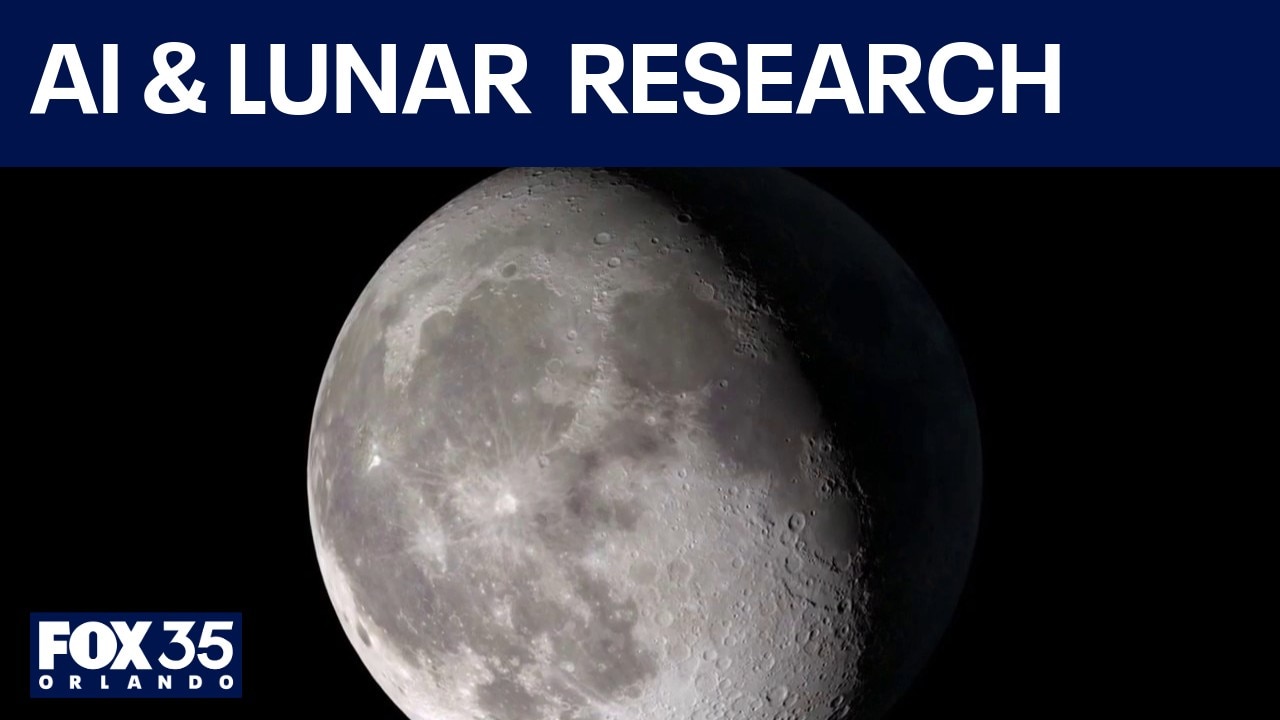
NASA deploys AI to fast-track future moon missions
NASA is turning to artificial intelligence to help scientists analyze decades of lunar data more quickly as it works toward returning astronauts to the moon through the Artemis program.
KENNEDY SPACE CENTER, Fla. - NASA is turning to artificial intelligence to help scientists analyze decades of lunar data more quickly as it works toward returning astronauts to the moon through the Artemis program.
AI trained on decades of lunar data
Why you should care:
The agency recently announced a partnership with IBM Research and several academic institutions to develop the NASA-IBM Lunar Foundation Model, an AI system trained on nearly 20 years of data collected by lunar orbiters. NASA says the technology is designed to help researchers quickly identify features on the moon's surface, including potential landing sites and areas that may contain water ice.
"We're going to be able to find things so much faster," said Zachary Aubert, founder and CEO of The Launch Pad Network.
The AI model can rapidly search for specific characteristics across vast amounts of lunar imagery and scientific data, reducing work that would otherwise take researchers much longer.
"I'm looking for these exact parameters, this depth of a crater, this much darkness by that crater. In a matter of minutes or hours, you could find new places that we never even thought to look for ice," Aubert said.
NASA says the new model was built using data collected by lunar orbiters over nearly two decades and is intended to help scientists make better use of the agency's extensive archive of information.
"It's looking at new technologies. It's looking at how can we move faster," Aubert said.
Supporting the next phase of lunar exploration
The effort comes as the United States and China continue pursuing ambitious lunar exploration programs, increasing the importance of quickly analyzing scientific data and identifying future exploration targets.
Rather than replacing scientists, experts say AI can perform the time-consuming task of sorting through massive datasets, allowing researchers to focus on interpreting the results.
"It does the big comb through. It does the ugly work looking through," Aubert said.
Nikki Fox, NASA's associate administrator for the Science Mission Directorate, said the agency sees AI as a way to unlock new discoveries from its enormous scientific archives.
"We also have to make data easier for scientists to explore and use. The NASA-IBM Lunar Foundation Model shows what's possible when we bring AI to NASA's petabytes of scientific data. That's a real opportunity we see with AI: turning large-scale data into new discoveries."
Scientists remain essential
Experts caution that AI still requires human oversight.
"It's going to help us find things faster, but it's also AI. We're still learning AI models," Aubert said.
He said scientists will continue to play the key role in evaluating discoveries and determining where future missions should focus.
"You start to actually use your scientists for a much more detailed analysis," Aubert said.
Public access to the model
What you can do:
The Lunar Foundation Model is publicly available, allowing researchers, educators and members of the public to access the data and experiment with the technology themselves. NASA has not said whether the new AI initiative will affect staffing at the agency.
The Source: This story was written based on information shared by …